AI Solution Builder for [Redacted]
My work focused on translating a highly technical AI product into a visual, step-by-step experience that supports customer education and adoption. I mapped the customer journey, designed interaction patterns, refined interface flows, and collaborated with Become to visualize evolving environments that respond to user inputs. Through this project, I strengthened my understanding of AI implementation, learned how consulting teams shape product rollout strategy, and developed a customer-centric design approach that makes complex systems feel simple and actionable.
Aug 8, 2025
LENGTH
2 months
LENGTH
2 months
LENGTH
2 months
Role
Part of UX Team
Role
Part of UX Team
Role
Part of UX Team
Service
Design, Research, & Strategy
Service
Design, Research, & Strategy
Service
Design, Research, & Strategy
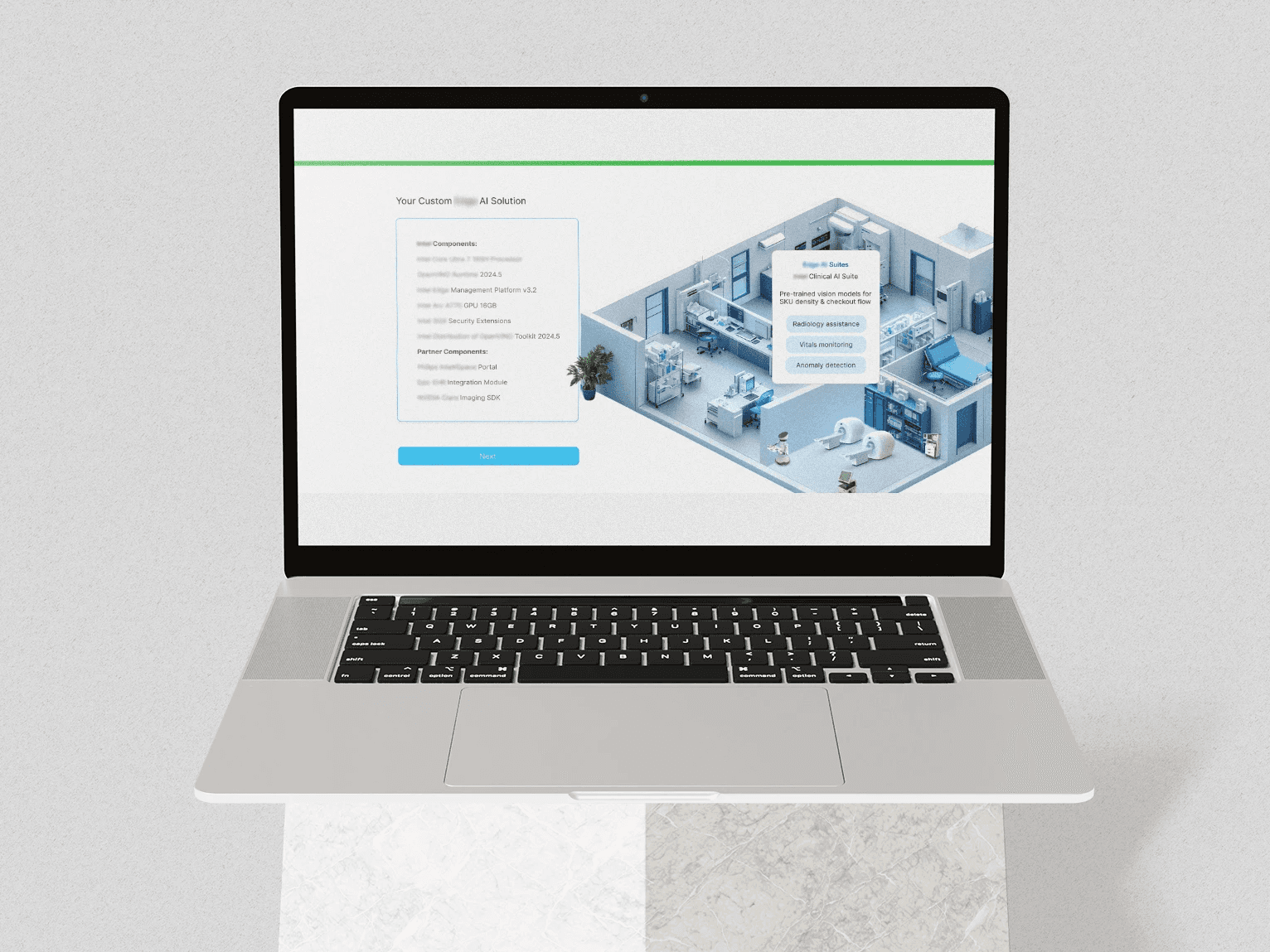
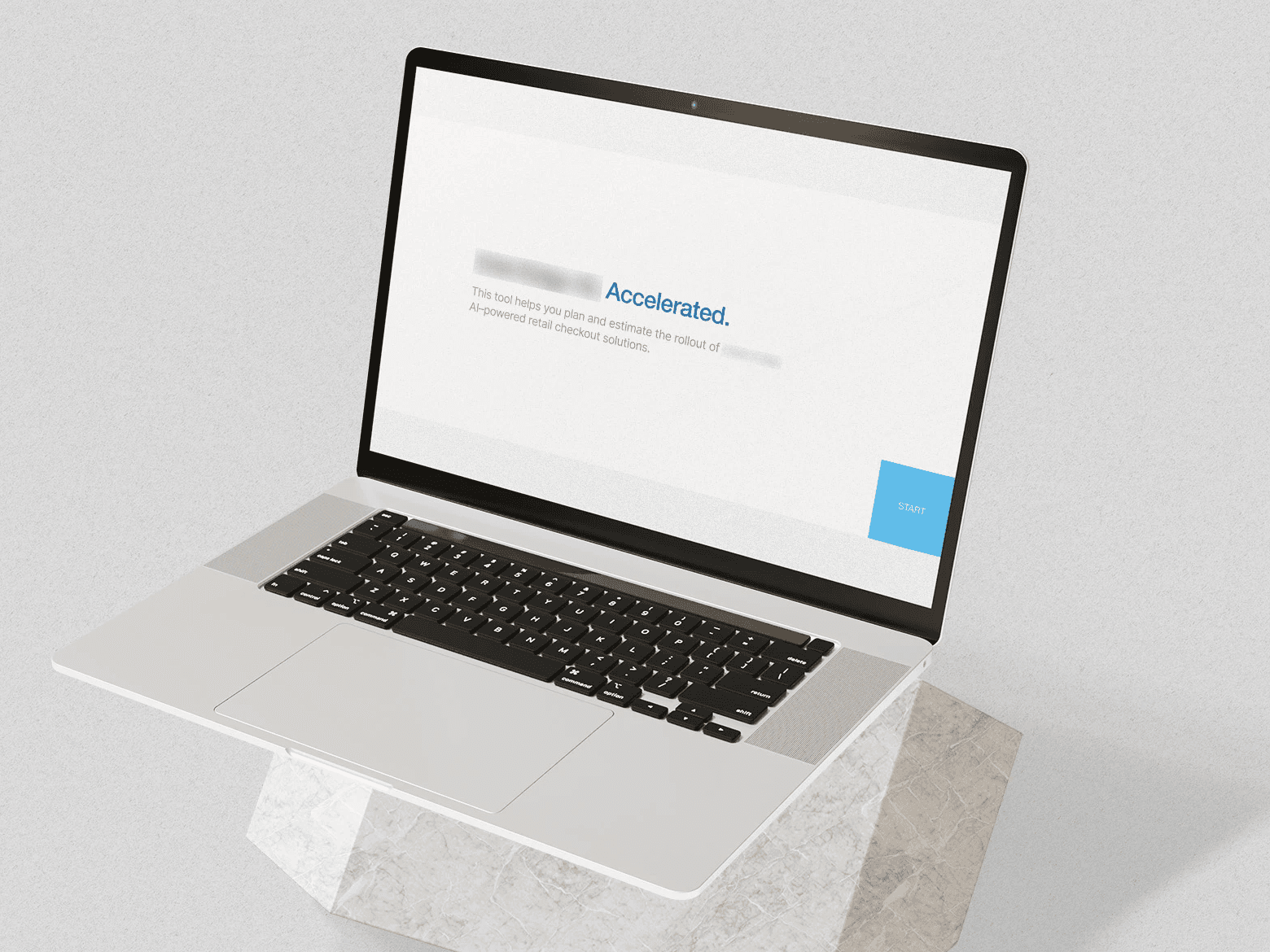
Designing the customer-facing experience for a Fortune 100 semiconductor company’s new AI product rollout.
Designing the customer-facing experience for a Fortune 100 semiconductor company’s new AI product rollout.
Designing the customer-facing experience for a Fortune 100 semiconductor company’s new AI product rollout.
Making a next-generation AI product understandable to customers
While interning at Spearhead, I joined a team supporting the rollout of a Fortune 100 semiconductor company’s latest AI offering. The technical innovation was strong, but customers struggled to understand what the product actually enabled. My role was to help design a clear, visual, and configurable experience that would introduce the product, show how it fits into real workflows, and make adoption feel intuitive.
Making a next-generation AI product understandable to customers
While interning at Spearhead, I joined a team supporting the rollout of a Fortune 100 semiconductor company’s latest AI offering. The technical innovation was strong, but customers struggled to understand what the product actually enabled. My role was to help design a clear, visual, and configurable experience that would introduce the product, show how it fits into real workflows, and make adoption feel intuitive.
Making a next-generation AI product understandable to customers
While interning at Spearhead, I joined a team supporting the rollout of a Fortune 100 semiconductor company’s latest AI offering. The technical innovation was strong, but customers struggled to understand what the product actually enabled. My role was to help design a clear, visual, and configurable experience that would introduce the product, show how it fits into real workflows, and make adoption feel intuitive.
A guided AI product walkthrough for enterprise customers
In collaboration with Spearhead’s strategy team and Become’s UI team, I designed a multi-step walkthrough that introduces the company’s new AI product through scenarios, scale sliders, and environment visualizations. Customers answer a few questions about their goals and operations, and the interface previews how the AI product would function in their world. This helped the client communicate value at launch and gave their sales teams a sharable, interactive tool.
A guided AI product walkthrough for enterprise customers
In collaboration with Spearhead’s strategy team and Become’s UI team, I designed a multi-step walkthrough that introduces the company’s new AI product through scenarios, scale sliders, and environment visualizations. Customers answer a few questions about their goals and operations, and the interface previews how the AI product would function in their world. This helped the client communicate value at launch and gave their sales teams a sharable, interactive tool.
A guided AI product walkthrough for enterprise customers
In collaboration with Spearhead’s strategy team and Become’s UI team, I designed a multi-step walkthrough that introduces the company’s new AI product through scenarios, scale sliders, and environment visualizations. Customers answer a few questions about their goals and operations, and the interface previews how the AI product would function in their world. This helped the client communicate value at launch and gave their sales teams a sharable, interactive tool.

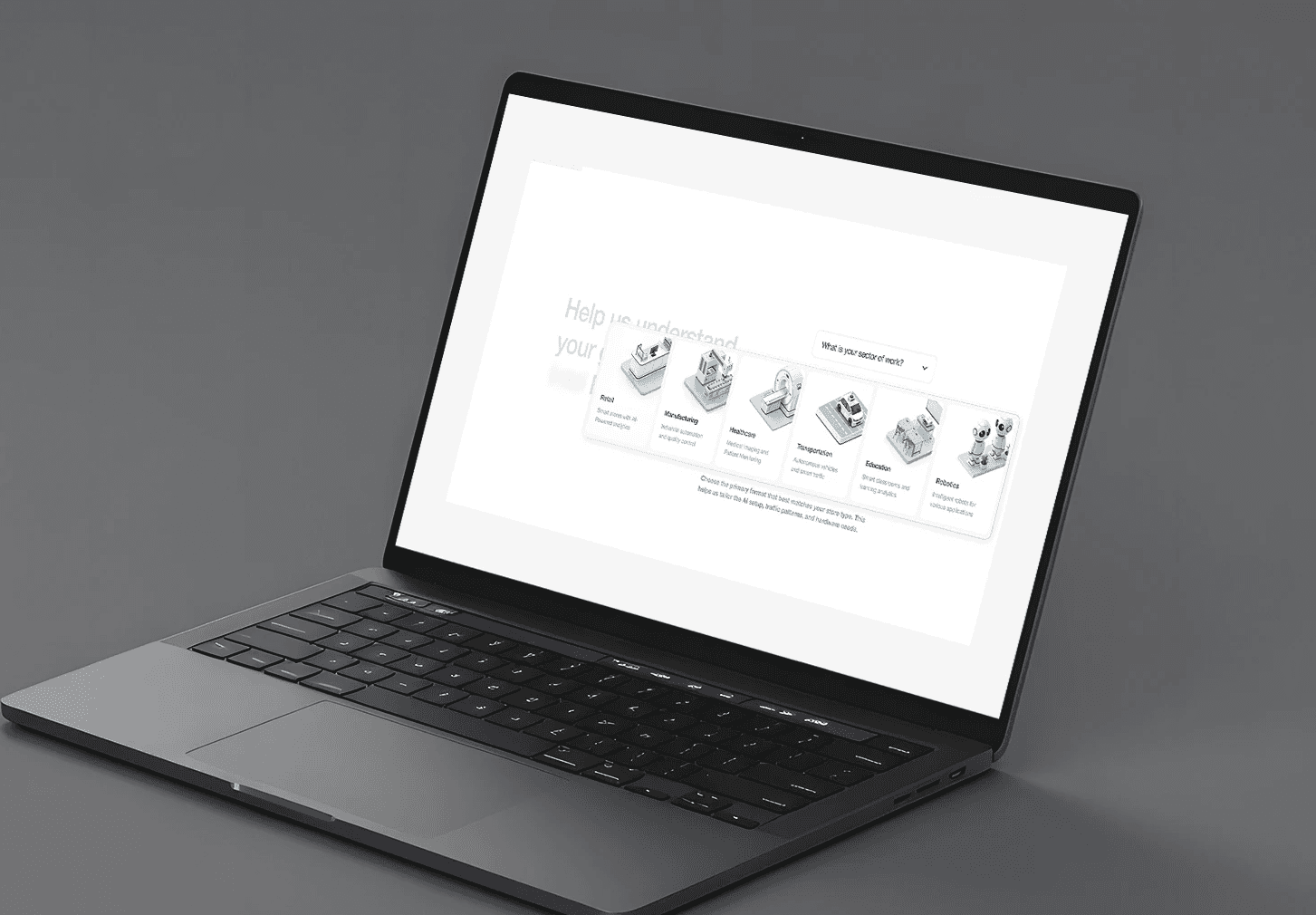
Scenario cards and goal selectors introduce the AI product through outcomes, giving customers an entry point into the technology.
Scenario cards and goal selectors introduce the AI product through outcomes, giving customers an entry point into the technology.
Scenario cards and goal selectors introduce the AI product through outcomes, giving customers an entry point into the technology.
Successful rollout starts with customer language
At Spearhead, I learned how consulting teams uncover what customers actually need to hear. Enterprise clients don’t begin with architecture—they begin with pains, budgets, and desired outcomes. Starting the tool with “What are your goals?” rather than “What components do you use?” was essential in supporting the client’s rollout strategy. This shaped the first screens and grounded the experience in design strategy principles.
Successful rollout starts with customer language
At Spearhead, I learned how consulting teams uncover what customers actually need to hear. Enterprise clients don’t begin with architecture—they begin with pains, budgets, and desired outcomes. Starting the tool with “What are your goals?” rather than “What components do you use?” was essential in supporting the client’s rollout strategy. This shaped the first screens and grounded the experience in design strategy principles.
Successful rollout starts with customer language
At Spearhead, I learned how consulting teams uncover what customers actually need to hear. Enterprise clients don’t begin with architecture—they begin with pains, budgets, and desired outcomes. Starting the tool with “What are your goals?” rather than “What components do you use?” was essential in supporting the client’s rollout strategy. This shaped the first screens and grounded the experience in design strategy principles.
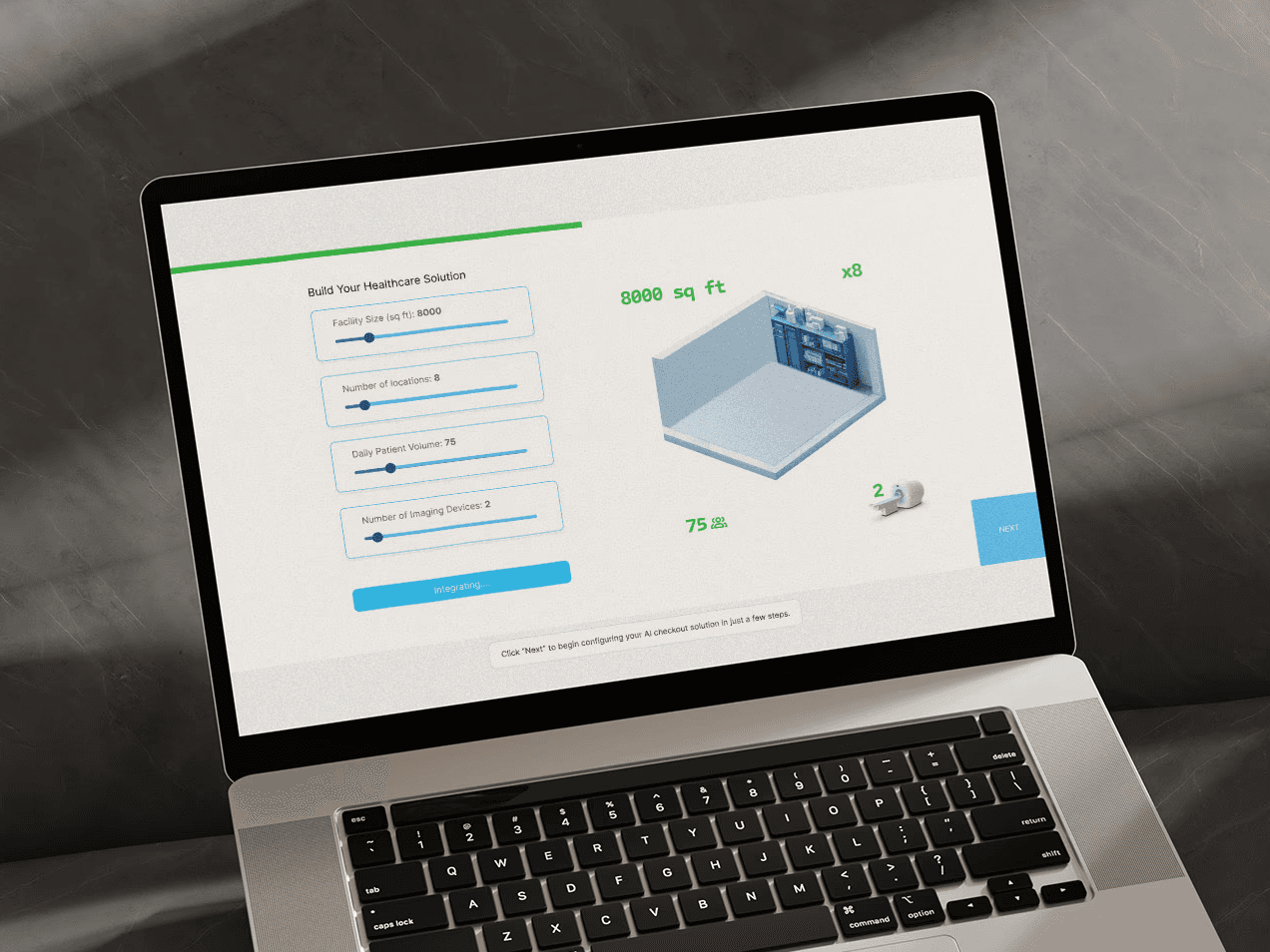
Interactive sliders animate changes in scale, device count, throughput, and layout—turning product education into exploration.
Interactive sliders animate changes in scale, device count, throughput, and layout—turning product education into exploration.
Interactive sliders animate changes in scale, device count, throughput, and layout—turning product education into exploration.
Visualization bridges the gap between product and workflow
To help customers imagine using the new AI product, I worked with Become to design evolving isometric environments that update based on scale, facility size, or hardware requirements. This let the product "show itself" inside the customer’s world. It taught me how powerful visualization can be in early-stage product rollout—especially when the underlying technology is abstract.
Visualization bridges the gap between product and workflow
To help customers imagine using the new AI product, I worked with Become to design evolving isometric environments that update based on scale, facility size, or hardware requirements. This let the product "show itself" inside the customer’s world. It taught me how powerful visualization can be in early-stage product rollout—especially when the underlying technology is abstract.
Visualization bridges the gap between product and workflow
To help customers imagine using the new AI product, I worked with Become to design evolving isometric environments that update based on scale, facility size, or hardware requirements. This let the product "show itself" inside the customer’s world. It taught me how powerful visualization can be in early-stage product rollout—especially when the underlying technology is abstract.
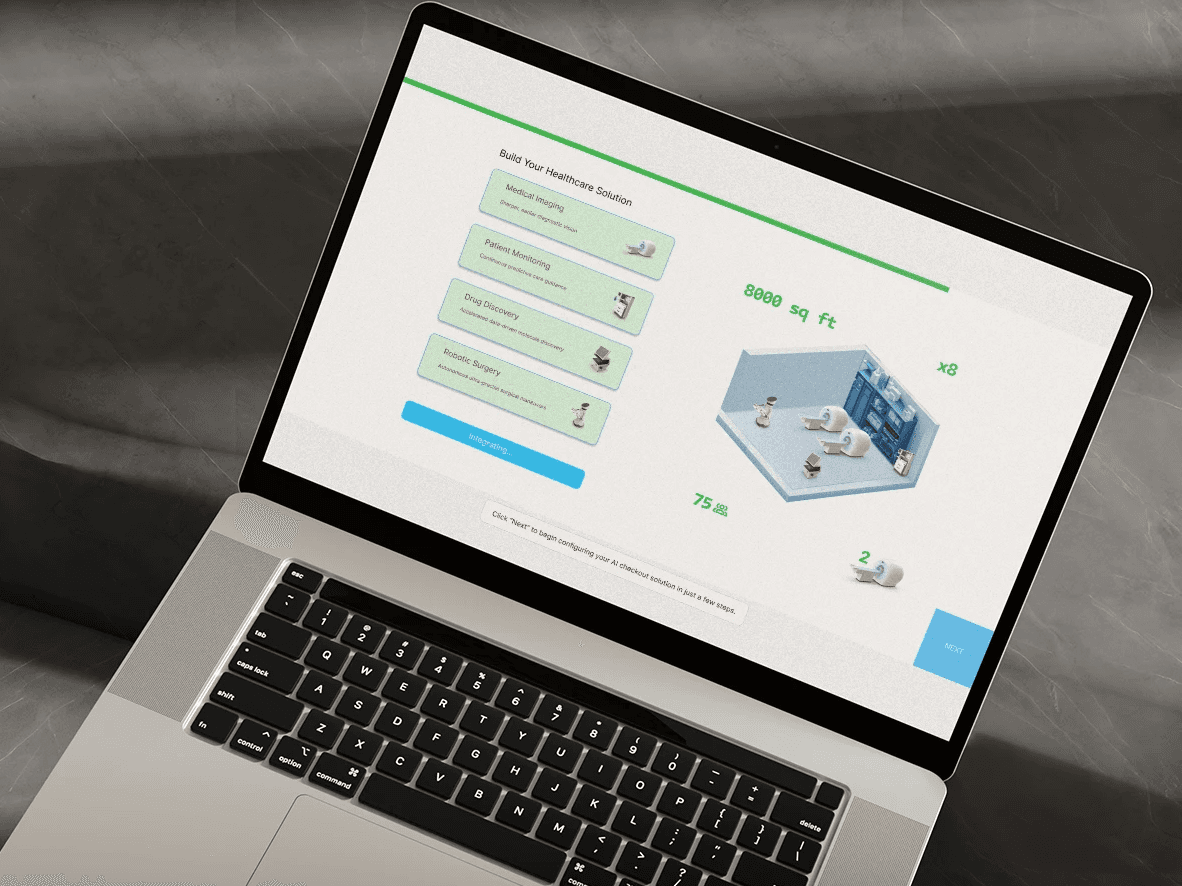
This step lets users select their healthcare AI use cases while the environment updates in real time—helping them visualize how the system adapts to scale and workflow needs.
This step lets users select their healthcare AI use cases while the environment updates in real time—helping them visualize how the system adapts to scale and workflow needs.
This step lets users select their healthcare AI use cases while the environment updates in real time—helping them visualize how the system adapts to scale and workflow needs.
Interactive sizing builds trust during AI adoption
One thing Spearhead taught me is that rollout success often depends on reducing uncertainty. Small, approachable interactions—like tuning daily volume or number of devices—help customers understand how the AI product scales and what they might need to implement it. These micro-interactions build confidence, reframe AI from intimidating to approachable, and give sales teams data-backed configurations.
Interactive sizing builds trust during AI adoption
One thing Spearhead taught me is that rollout success often depends on reducing uncertainty. Small, approachable interactions—like tuning daily volume or number of devices—help customers understand how the AI product scales and what they might need to implement it. These micro-interactions build confidence, reframe AI from intimidating to approachable, and give sales teams data-backed configurations.
Interactive sizing builds trust during AI adoption
One thing Spearhead taught me is that rollout success often depends on reducing uncertainty. Small, approachable interactions—like tuning daily volume or number of devices—help customers understand how the AI product scales and what they might need to implement it. These micro-interactions build confidence, reframe AI from intimidating to approachable, and give sales teams data-backed configurations.
Interactive sizing builds trust during AI adoption
One thing Spearhead taught me is that rollout success often depends on reducing uncertainty. Small, approachable interactions—like tuning daily volume or number of devices—help customers understand how the AI product scales and what they might need to implement it. These micro-interactions build confidence, reframe AI from intimidating to approachable, and give sales teams data-backed configurations.
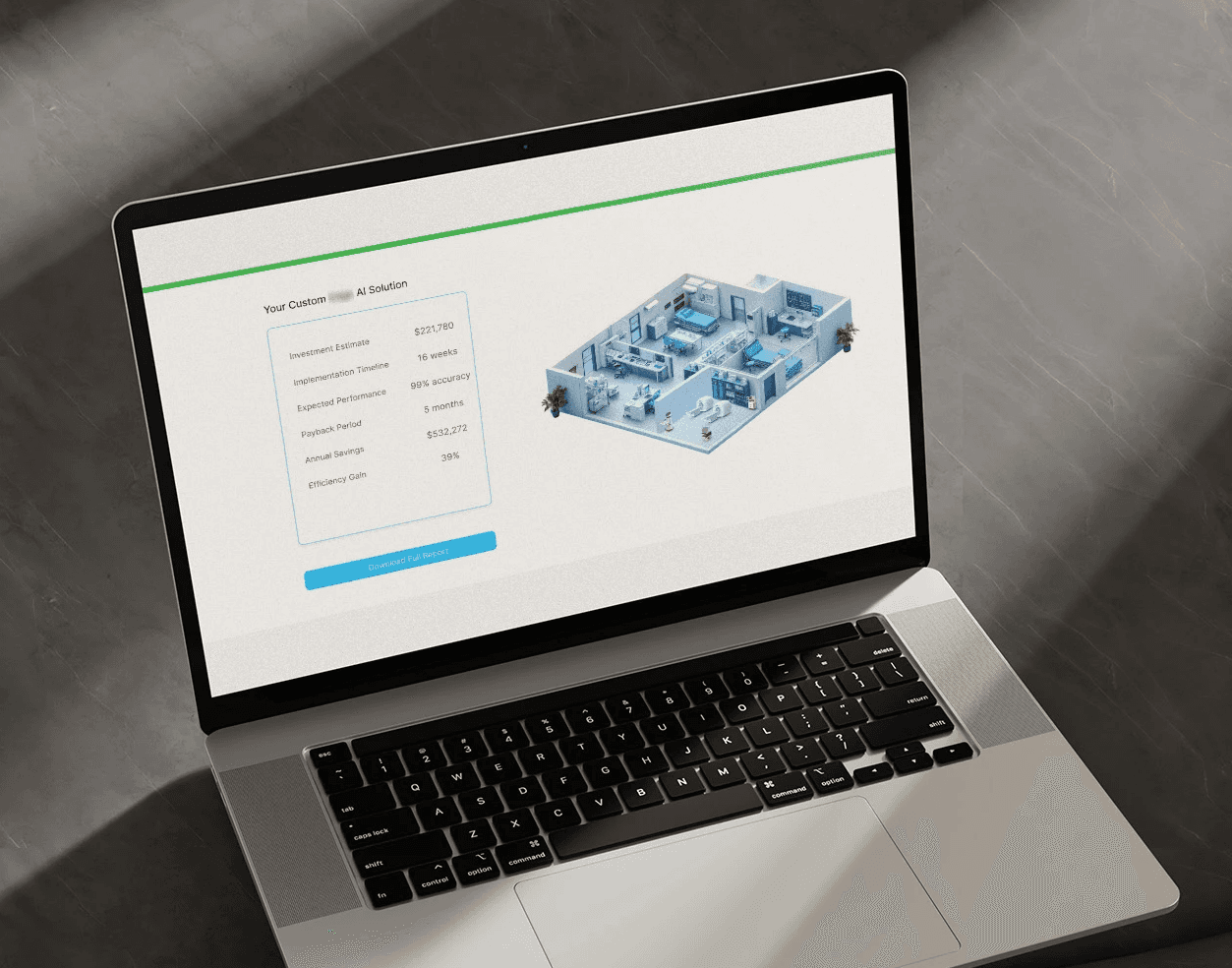
The final screen compiles a tailored configuration, performance expectations, and next steps—giving customers a clear path forward.
The final screen compiles a tailored configuration, performance expectations, and next steps—giving customers a clear path forward.
The final screen compiles a tailored configuration, performance expectations, and next steps—giving customers a clear path forward.
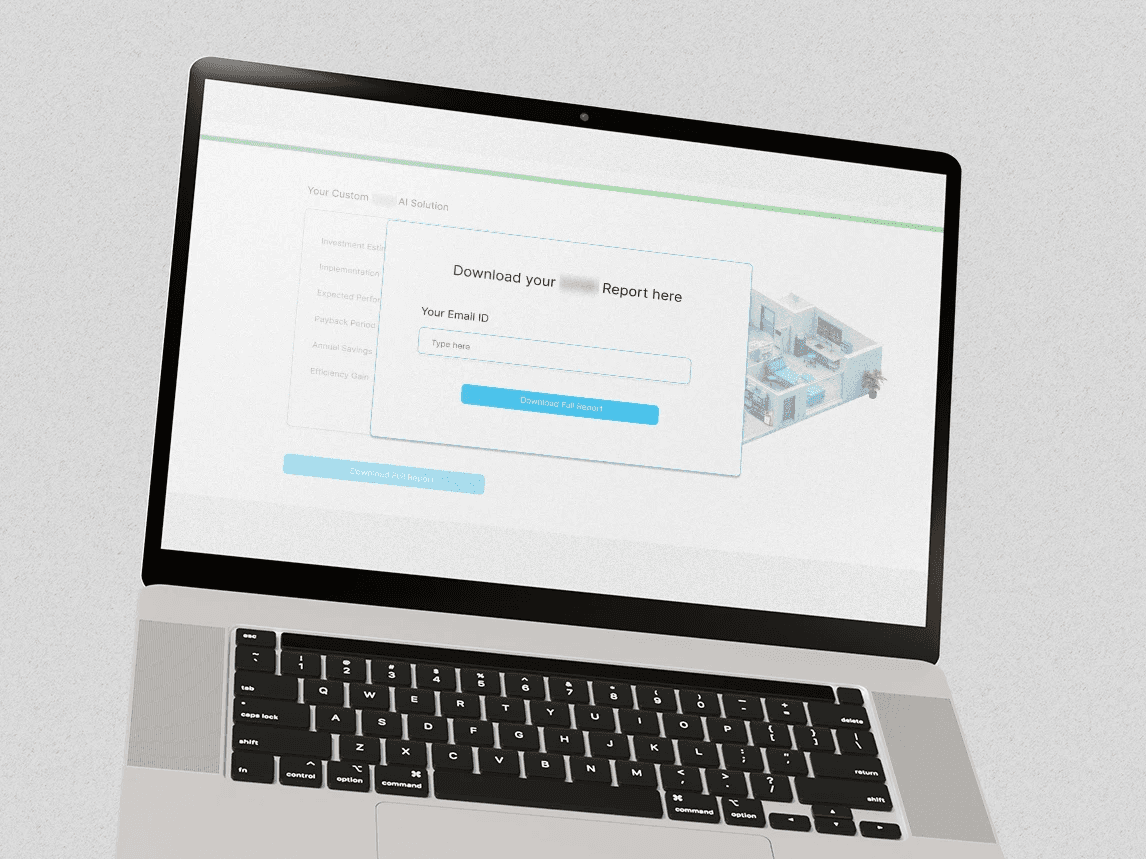
Clarity for customers, confidence for the rollout. The final walkthrough became a core component of the product’s go-to-market experience. It helps customers visualize how the new AI product works in their environment, understand what’s required, and see the benefits instantly. For me, this project sharpened my interest in AI systems, taught me how consulting teams guide product rollouts, and showed me how design strategy translates into real business communication.
Clarity for customers, confidence for the rollout. The final walkthrough became a core component of the product’s go-to-market experience. It helps customers visualize how the new AI product works in their environment, understand what’s required, and see the benefits instantly. For me, this project sharpened my interest in AI systems, taught me how consulting teams guide product rollouts, and showed me how design strategy translates into real business communication.